Cart
0
Runners Beyond Hallways: Smart Ideas for Every Corner of Your Home .The Unsung Hero of Interior Flow

A runner rug is defined by its proportions. It is longer than it is wide, designed specifically for narrow areas where standard sizes would feel excessive. Many people use the terms runner mat and runner rug interchangeably, but the purpose remains the same — to introduce comfort and structure in transitional spaces such as hallways, kitchen walkways, or the side of a bed. Depending on the room, material choice becomes important. Wool offers resilience and warmth underfoot, cotton feels lighter and easier to maintain, while modern fiber blends are often chosen for kitchens or high-use zones where durability matters most.
Proportion is what separates a well-styled runner from one that feels misplaced. Leaving visible flooring at both ends allows the rug to breathe within the architecture. In most homes, maintaining a few inches of exposed floor along the sides prevents the walkway from looking cramped. A longer runner can visually extend a corridor, creating flow between rooms, while a shorter one can anchor a compact space without overwhelming it. Measuring carefully before selecting dimensions ensures the piece works with the room’s scale rather than against it.
Where to Use Runners in Your Home
Runners excel in spaces that benefit from warmth and movement. In entryways, they create a welcoming tone. The first step onto a soft runner sets the mood, transforming a transitional zone into an inviting introduction to the rest of the home. A runner adds texture against cold tile or wood and provides comfort underfoot.
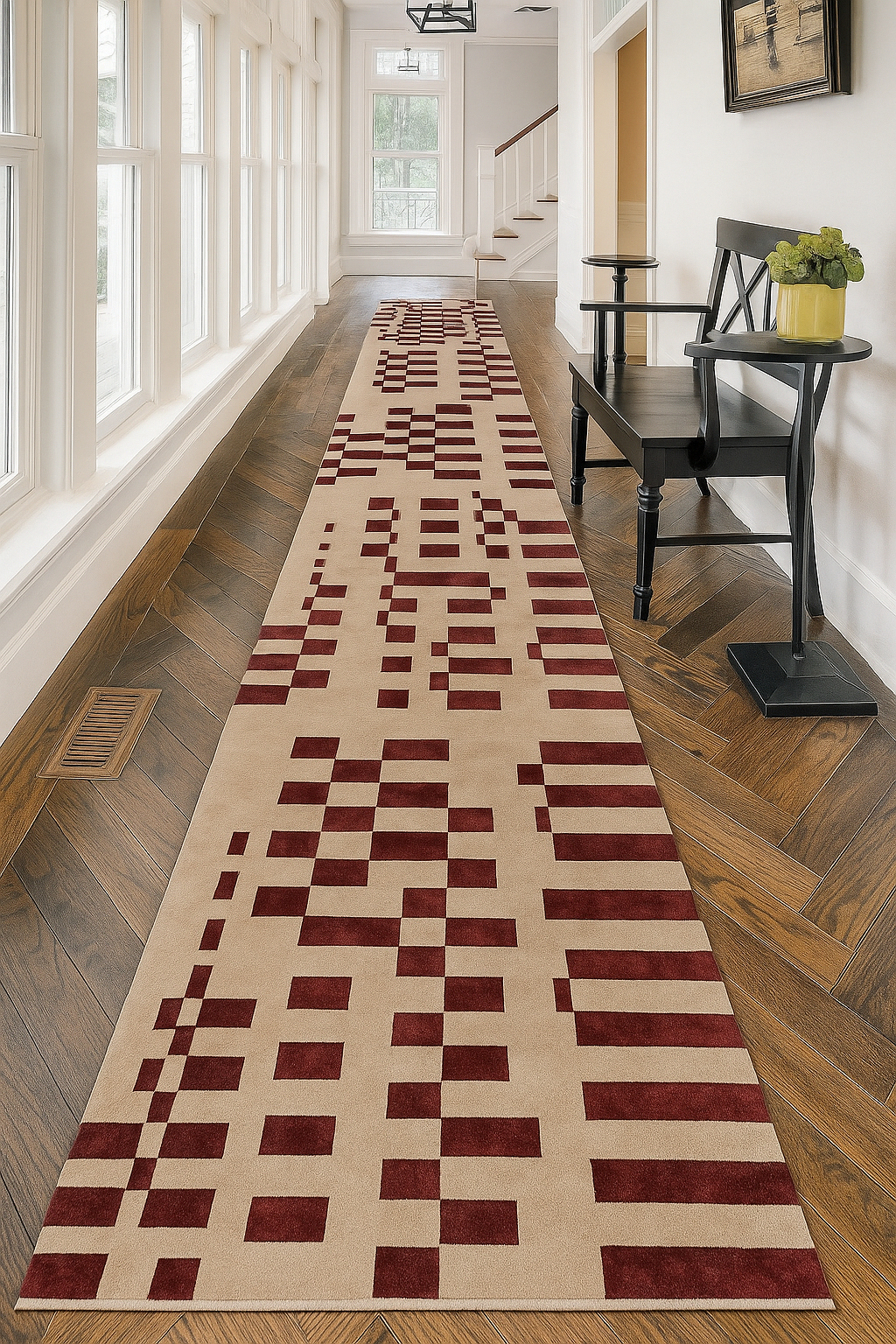
Hallways are natural settings for runners. Without one, they can feel sterile or echo-filled. Adding a runner brings character, draws the eye forward, and visually connects rooms. When paired with artwork or wall lighting, the runner becomes part of a thoughtful design story.
Bedrooms offer another excellent opportunity. Placing a runner beside the bed creates a gentle landing for your feet each morning. In larger rooms, a runner at the foot of the bed anchors furniture and adds visual layering. The effect is quiet luxury that feels both cozy and intentional.
In kitchens, especially those with galley layouts, runners offer comfort during long hours of standing. They bring color and rhythm to functional zones. A kitchen runner works best when it is slightly narrower than the walkway, leaving a slim margin of visible floor on each side.
Even staircases can benefit from runners. They improve traction, reduce noise, and create a refined focal point. Patterned stair runners help disguise wear while adding visual continuity from one level to another.
Where to Place Runner Rugs for the Best Visual Balance
Placement is all about balance and flow. A runner should never be pressed against the wall. Instead, center it so that the flooring borders are symmetrical on both sides. This alignment makes the passage feel larger and well-proportioned.
In open-plan spaces, runners can serve as visual guides. Align one along a furniture line to subtly define pathways. For example, placing a slim runner between a sofa and a dining table can direct foot traffic while maintaining aesthetic harmony. Always leave a few inches of flooring visible at each end so the rug feels intentional and integrated.
If you are using multiple runners in adjoining areas, keep their lengths proportional. This consistency maintains rhythm across rooms and helps the interior feel connected. Think of runners as visual threads that link your spaces together.

How to Choose the Right Runner Size for Different Spaces
Choosing the right runner size is less about fixed measurements and more about proportion and movement. Because runners are designed for narrow zones, their role is to guide flow rather than dominate the space. The most important rule is balance. A runner should feel integrated into the architecture, not pressed edge to edge.
In hallways, the runner should sit comfortably within the width of the passage, leaving visible flooring on both sides. This border helps the hallway feel wider and prevents the rug from looking like wall-to-wall carpeting. Length matters just as much. A runner that stops short of the walls by a few inches at each end feels intentional and visually lighter.
In kitchens, especially galley or corridor-style layouts, runners should be narrow enough to allow cabinet doors to open freely while still covering the main walking path. Slightly shorter runners often work better here, as they define the functional zone without extending into adjoining spaces.
Beside the bed, runners should align with the bed length or stop just before the headboard and footboard. The goal is comfort where you step down, not full coverage. A runner that is too long or too wide can disrupt the calm balance of a bedroom.
For staircases, consistency is key. The runner should be centered on each step, with equal margins on both sides, and extend smoothly from top to bottom without abrupt breaks. This creates visual continuity and improves safety.
Before choosing a runner, measure the usable walking area rather than the full room width. This ensures the runner supports movement naturally and enhances the space instead of overwhelming it.
Picking the Right Runner for the Right Job
Each area of the house calls for a specific type of rug based on traffic, lighting, and function. In busy hallways and kitchens, durability is essential. A dense hand-knotted rugs or flatweave rugs runner resists heavy use and holds its shape over time. Wool is the best natural fiber for resilience and comfort, while cotton offers a casual look and easy maintenance. Hand tufted rugs like silk and blended options add sheen and luxury but are better suited for low-traffic zones such as dressing areas or guest bedrooms.
Thickness matters too. Low-pile constructions work well near doors and in tight spaces, while higher piles are ideal for areas that prioritize comfort. Always pair a runner with a non-slip rug pad. This improves safety, prevents wear underneath, adds cushioning, and keeps the rug securely in place.
For modern interiors, neutral tones with soft gradients can visually expand small corridors. Traditional homes benefit from patterns with historical motifs or muted borders that echo architectural details. Choosing wisely transforms the runner from a utility item into a style anchor.
Playing with Style and Pattern
Runners offer a chance to be creative. Because they cover a limited area, you can take design risks without overwhelming the space. A bold geometric pattern adds personality to minimalist interiors, while subtle textures help calm busy rooms. Experiment with contrast. A dark runner on light flooring adds drama, while pale tones on dark floors introduce softness.
Consider the feel of the material as much as the color. A wool runner brings warmth underfoot, while a silk blend reflects light in moody corridors. Texture variation, such as loop and cut pile combinations, adds depth even in monochrome palettes. If your flooring already features strong visual interest, such as patterned tiles or textured wood, choose a runner in solid tones to maintain harmony.
Runners can also highlight architectural direction. Placed strategically, they draw attention to features like archways, window alignments, or sight lines toward a focal piece. Think of them as visual cues that guide the eye across your interior story.
Layering for Added Depth
Layering is a stylistic technique often seen in well-curated homes. It adds sophistication through texture contrast. Place a slim runner atop a larger neutral rug in living rooms or bedrooms to create a sense of elevation and depth. This layered look makes spaces feel collected rather than staged. It works especially well in open interiors where zones need subtle separation.
Seasonal rotation is another benefit of layering. During warmer months, light cotton or jute runners maintain an airy feel. In winter, thicker wool blends bring warmth. Layering also allows you to shift color palettes without replacing your entire rug setup. The goal is to make design evolution effortless and cost-effective.
Styling Mistakes to Avoid
Even a well-chosen runner can lose its impact if placement or proportion is off. A common mistake is selecting a rug that is too short for the corridor, which visually shortens the space and disrupts flow. Another issue is matching patterns too closely with the flooring or wall decor. True harmony comes from complementary contrast, not duplication.
Keep furniture slightly away from the edges of the runner to maintain a balanced look. Leaving space on each side helps the rug feel intentional rather than cramped. Skipping a rug pad is another misstep. Pads not only improve safety but also protect the rug’s structure and absorb daily wear.
Lighting affects how a runner looks more than most people realize. Harsh or dim lighting can distort colors, especially in narrow areas. Natural or soft lighting brings out textures and tones more evenly. When your eye moves smoothly from one end of the space to the other, the runner is doing its job well.
In a Nutshell
A runner rug is not just a decorative strip. It is a design strategy. It defines paths, connects spaces, and softens transitions. When thoughtfully placed, it elevates everyday moments, from stepping out of bed to entering the kitchen. The right material ensures durability, the right color sets the mood, and the right size creates proportion. Whether it lies across a hallway or anchors the edge of a bedroom, a runner becomes an understated expression of style and function.
These narrow rugs remind us that great design often lives in the details. They blend practicality with beauty and create seamless movement between rooms. Once placed correctly, a runner transforms from accessory to architectural element, shaping how you walk, feel, and experience your home.
FAQs
What is a runner mat?
A long and narrow rug ideal for hallways, kitchens, and spaces where traditional rugs cannot fit.
What is a runner rug?
A floor covering designed for narrow areas that combines comfort, protection, and visual direction.
Where can runners be used?
They are perfect for hallways, entryways, bedrooms, kitchens, staircases, and walk-in closets.
Where should a runner rug go?
In transitional areas that need warmth, definition, or color without taking up too much space.
How should runner rugs be placed?
Keep them centered with a slim border of flooring visible on both sides for symmetry.
What type of rug is best for a hallway?
A durable low-pile design made from natural wool or a flatweave construction for longevity.
What are the most popular colors for hallway rugs?
Neutral tones are timeless, while soft blues, greens, and terracotta shades add personality.
Where should runners be placed in a house?
Anywhere narrow that connects two living zones, helping unify the visual flow.
What length should a runner be?
Measure the area carefully and leave four to six inches of visible flooring at each end for proportion.
About the author
Afzal Rub is an interior designer who graduated from Pearl Academy of Design with a degree in Textile Interior Design in 2016. He then began his career in New Delhi City by spearheading his own design firm decordec, which handles various high-end design projects in India and beyond. His work has been featured in celebrity homes and he is known for his characteristic of being a tastemaker in the carpet world.
In 2019, Afzal opened his own Decordec, a creative ecosystem for collaboration and development, focusing on experimentation, craftsmanship and technique. Here, artists come together to narrate tales of evolving aesthetics. Decordec is particularly known for its geometry, materiality, and simple aesthetic.
Furthermore, amid a global pandemic that has brought the entire world to a standstill, Afzal wanted to create a formalised body of change amongst designers and has been able to conceptualise and collaborate to launch.
In 2019, Afzal opened his own Decordec, a creative ecosystem for collaboration and development, focusing on experimentation, craftsmanship and technique. Here, artists come together to narrate tales of evolving aesthetics. Decordec is particularly known for its geometry, materiality, and simple aesthetic.
Furthermore, amid a global pandemic that has brought the entire world to a standstill, Afzal wanted to create a formalised body of change amongst designers and has been able to conceptualise and collaborate to launch.
written by Talha Ansari