Cart
0
When people begin searching for a rug, they often come across two terms that sound similar but represent very different techniques: hand knotted rugs and hand tufted rugs. At first glance, both can appear equally beautiful, with rich colors, detailed patterns, and soft textures. The real difference, however, lies in how they are made, which directly affects durability, lifespan, and pricing.
Understanding this distinction is essential when choosing a rug for your home.
From what we’ve seen in real homes, most people don’t initially focus on how a rug is made. They are drawn to how it looks. But over time, the structure becomes more important than the design itself, especially when the rug starts experiencing regular use.
A rug is not just a decorative layer. It shapes how a room feels, adds comfort underfoot, and helps connect the overall layout. Some rugs are created to last for decades, while others are designed to offer flexibility in style and use.
In this guide, we’ll break down how these two constructions differ, what sets them apart, and how to recognize each type when shopping. Once you understand the structure behind them, making the right choice becomes far more intuitive.

What Is a Hand Knotted Rug
Hand knotted rugs represent one of the oldest and most respected forms of rug craftsmanship in the world. The technique has been practiced for centuries across regions such as Persia, India, Turkey, and Central Asia, where weaving traditions were passed down through generations of skilled artisans. Unlike machine-made rugs or faster handmade techniques, a hand knotted rug is built entirely knot by knot, creating a structure that is both durable and highly detailed.
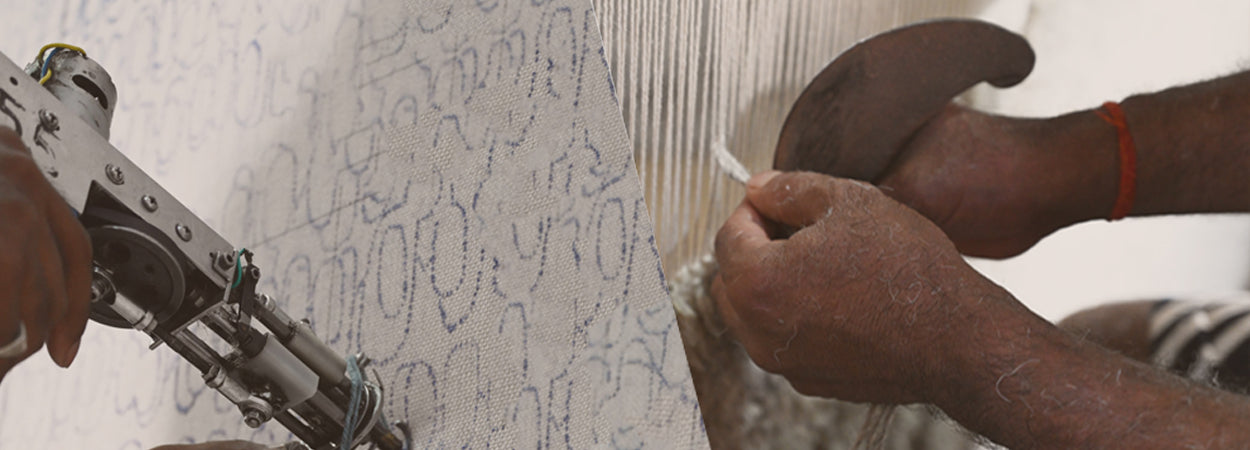
The process begins with a loom, which is the frame used to hold the rug’s foundation threads. These vertical threads are known as warp threads, and they form the structural base of the rug. Artisans then tie individual knots of yarn around these warp threads using specialized weaving techniques. Each knot is placed carefully according to a design pattern that the weaver follows row by row.
Every knot forms part of the rug’s pile and structure at the same time. This is what makes hand knotted rugs unique. The design is not printed or glued onto the surface. Instead, it is literally built into the rug’s foundation through thousands or even millions of knots. Because of this method, the rug becomes incredibly strong and capable of maintaining its form for many years.
Creating a hand knotted rug requires patience, precision, and deep experience. Depending on the size of the rug and the complexity of the pattern, the weaving process can take several months and sometimes even longer. Smaller rugs may take a few weeks to complete, while larger or more intricate designs can require many months of work by skilled weavers.
One important factor that influences the detail of a hand knotted rug is knot density. Knot density refers to the number of knots tied within a specific area of the rug. Rugs with higher knot density usually feature more detailed patterns and finer design elements because the weaver can create more precise shapes and motifs within the design.
Because the knots form the structure of the rug itself, hand knotted rugs are known for their remarkable durability. Unlike other rug types that rely on adhesives or backing materials, the knots hold the rug together naturally. This allows the rug to withstand years of foot traffic while maintaining its shape and appearance.
Another unique characteristic of hand knotted rugs is how they age. Over time, the fibers soften and develop a rich texture that many collectors appreciate. In fact, some antique hand knotted rugs become more valuable with age because the craftsmanship and materials continue to endure over decades.
One of the easiest ways to identify a hand knotted rug is by examining the back of the rug. If you turn the rug over, you will usually see the same pattern that appears on the front. The knots forming the design are visible from the back, often creating a slightly softer or more muted version of the pattern. This mirrored appearance is a strong indicator that the rug was knotted by hand rather than tufted or machine produced.
Another detail to observe is the fringe. In genuine hand knotted rugs, the fringe is not added afterward. Instead, it is formed by the warp threads that extend from the rug’s foundation. Because the fringe is part of the structure itself, it is integrated naturally into the rug.
Materials also play an important role in hand knotted rugs. Many traditional rugs are woven using natural fibers such as wool, silk, or cotton. Wool is especially popular because it is durable, naturally resilient, and comfortable underfoot. Silk is sometimes used to add highlights or create intricate design details, while cotton is often used for the rug’s foundation.
Today, hand knotted rugs continue to be valued not only for their durability but also for their artistic quality. Each rug reflects the time, effort, and craftsmanship of the artisans who created it. No two pieces are exactly the same, which gives these rugs a distinctive character that machine-made rugs cannot replicate.
For readers interested in exploring examples of this traditional craftsmanship, you can view a variety of hand knotted rug designs

These rugs showcase the timeless weaving techniques that have made hand knotted rugs one of the most admired forms of textile artistry in interior design.
What Are Hand Tufted Rugs
Hand tufted rugs are also handmade, but the technique used to create them is very different from the traditional knotting process. While hand knotted rugs are built knot by knot on a loom, hand tufted rugs are produced using a specialized tool called a tufting gun. This tool allows artisans to insert yarn through a stretched fabric backing quickly and precisely, making the process significantly faster.

The rug begins with a large frame where a fabric backing is tightly stretched. Artisans then follow a design pattern drawn on the backing and use the tufting gun to push yarn through the fabric. As the yarn passes through, it forms loops on the front surface of the rug, creating the pile that gives the rug its soft texture and visual depth.
Once the entire design has been tufted, the rug is removed from the frame and turned over so the back can be finished. A layer of latex adhesive is applied to the back of the rug to hold the yarn securely in place. This step is important because it prevents the fibers from loosening over time. After the adhesive layer dries, an additional backing fabric is attached to give the rug more stability and durability.
This construction method allows artisans to create detailed and visually rich designs much faster than traditional knotting. While a hand knotted rug may take several months to complete, a tufted rug can often be finished within a few days or weeks depending on its size and complexity. Because of this shorter production time, these rugs are generally more accessible in terms of cost.
Even with this efficiency, they still offer qualities that suit modern interiors well. Bold patterns, layered colors, and plush textures bring warmth and comfort into a space. The thicker pile created through tufting also makes them soft underfoot, which is why they are commonly used in living rooms, bedrooms, and relaxed seating areas.
Another advantage lies in their design flexibility. The process allows artisans to follow complex patterns with ease, enabling a wide range of styles from contemporary geometric layouts to traditional motifs. This versatility makes them a practical choice for homeowners who want strong design impact without moving into higher investment categories.

Because the fibers in tufted rugs are secured using adhesive rather than individual knots, their structure differs from hand knotted pieces. Over time, the backing and adhesive can show signs of wear depending on how the rug is used and maintained. For this reason, tufted rugs are often selected for spaces where comfort and design take priority over long-term durability.
If you turn one over, you will typically notice a fabric backing that covers the entire rear surface. Unlike hand knotted rugs, the design is not visible from the back since the fibers are inserted through the base rather than woven into it.
Today, hand tufted rugs continue to be one of the most popular handmade options in interior design. In many cases, clients prefer hand tufted rugs when they want something comfortable and visually strong without committing to a long-term piece. It works especially well in spaces where design changes over time or where the rug is used in a more relaxed setting.
They bring the look and feel of handcrafted textiles while remaining accessible to a wider range of homes and styles.
For readers interested in exploring examples of modern tufted designs, you can view different styles of hand tufted rugs.

Construction Difference Between Hand Knotted and Hand Tufted Rugs
In a hand knotted rug, every strand of yarn is tied into the foundation of the rug itself. The knots create both the structure and the pile. This makes the rug extremely durable because the design is literally built into the rug’s framework.
In a hand tufted rug, the yarn is pushed through the backing and then secured with adhesive. The pile sits on the surface rather than being structurally tied into the foundation. While this still creates a beautiful rug, it means the overall structure relies on the backing and adhesive rather than knots.
This difference in construction explains why hand knotted rugs are often considered long term investments, while tufted rugs are chosen more for style, comfort, and affordability.
This difference usually doesn’t stand out in the beginning. Both types can feel equally good at first. The real change becomes visible after regular use, especially in spaces where the rug is used daily. Over time, the way it is constructed starts to matter more than how it initially looked.
Durability and Lifespan
Durability is one of the most noticeable differences between these two types of rugs.
Hand knotted rugs are known for their longevity. Because the knots form the structure of the rug, they can handle heavy foot traffic and daily use for many years. Some hand knotted rugs even become more beautiful with age as the fibers soften and develop character.
Hand tufted rugs typically have a shorter lifespan. On average, a tufted rug may last several years depending on how frequently it is used and how well it is maintained. High quality tufted rugs can still perform well in residential interiors, especially in spaces that do not experience constant foot traffic.
This difference does not mean tufted rugs are inferior. It simply means they serve a different purpose. They are ideal for homeowners who want flexibility in design and may prefer updating their decor every few years.
Price Differences
Price is another factor that separates these two rug types.
Hand knotted rugs require months of skilled labor, which naturally increases their cost. The price reflects the craftsmanship, time, and expertise involved in producing each piece. Many people consider them heirloom items that can last for generations.
Hand tufted rugs are generally more affordable because the production process is faster. This allows artisans to create large rugs with detailed patterns without the extended weaving time required for knotting.
For many homeowners, tufted rugs offer an excellent balance between design and cost.
How to Identify the Difference
If you are unsure whether a rug is hand knotted or hand tufted, there are a few simple ways to tell.
First, check the back of the rug. If the pattern is clearly visible and resembles the front design, the rug is likely hand knotted. The knots that form the design will be visible on the back.
If the back of the rug is covered with a fabric backing, it is usually a hand tufted rug. This backing is used to hold the tufted fibers in place.
Another clue is the fringe. In hand knotted rugs, the fringe is part of the rug’s foundation and comes directly from the warp threads. In tufted rugs, fringe is often attached afterward as a decorative element.
Main Differences in Construction and Durability
• Knot Density and Detail
• Back Side of the Rug
• Weight and Structure
• Maintenance and Cleaning
• Shedding Behavior
• Investment Value
• Design Flexibility
• Production Time
• Ideal Use Cases
• How to Identify Them While Shopping
Durability and Longevity
Durability is one of the reasons handmade rugs have been valued for centuries. The structure of the rug plays a significant role in determining how long it will last. In hand knotted rugs, each knot becomes part of the foundation, which makes the rug extremely strong and capable of lasting for decades with proper care.
Hand tufted rugs, while constructed differently, can also provide several years of comfortable use when placed in suitable areas of the home. Their plush pile makes them particularly appealing for spaces where softness underfoot is desirable, such as bedrooms or lounge areas.
Proper maintenance can further extend the life of both rug types. Regular vacuuming, occasional professional cleaning, and rotating the rug periodically can help maintain its appearance. Protecting the rug from excessive moisture and direct sunlight can also prevent premature wear.
Which Rug Should You Choose
If long-term durability and craftsmanship matter most, hand knotted rugs are often the right choice. They suit interiors where you want a piece that stays relevant for years and continues to age with character over time.
If your focus is on style, comfort, and flexibility, hand tufted rugs offer a more accessible option. They make it easier to experiment with different looks and refresh your interiors without committing to a long-term investment.
Both types bring warmth, texture, and visual depth into a room. The difference lies in how they are made and how they perform over time, which is what helps you decide what truly fits your home and lifestyle.
Conclusion
Rugs play a defining role in shaping how a space feels and functions. While hand knotted and hand tufted rugs may appear similar at first, their construction leads to clear differences in durability, cost, and overall lifespan.
Hand knotted rugs reflect centuries of craftsmanship and are built to last, often becoming more refined with time. Hand tufted rugs, on the other hand, offer design flexibility and comfort with a faster production process and a more approachable price range.
Understanding these differences allows you to make a more confident choice, selecting a rug that not only fits your space but also aligns with how you want your home to evolve.
About the author
Afzal Rub is an interior designer who graduated from Pearl Academy of Design with a degree in Textile Interior Design in 2016. He then began his career in New Delhi City by spearheading his own design firm decordec, which handles various high-end design projects in India and beyond. His work has been featured in celebrity homes and he is known for his characteristic of being a tastemaker in the carpet world.
In 2019, Afzal opened his own Decordec, a creative ecosystem for collaboration and development, focusing on experimentation, craftsmanship and technique. Here, artists come together to narrate tales of evolving aesthetics. Decordec is particularly known for its geometry, materiality, and simple aesthetic.
Furthermore, amid a global pandemic that has brought the entire world to a standstill, Afzal wanted to create a formalised body of change amongst designers and has been able to conceptualise and collaborate to launch.
In 2019, Afzal opened his own Decordec, a creative ecosystem for collaboration and development, focusing on experimentation, craftsmanship and technique. Here, artists come together to narrate tales of evolving aesthetics. Decordec is particularly known for its geometry, materiality, and simple aesthetic.
Furthermore, amid a global pandemic that has brought the entire world to a standstill, Afzal wanted to create a formalised body of change amongst designers and has been able to conceptualise and collaborate to launch.
written by Talha Ansari