Cart
0
What actually goes wrong in real homes
Most people don’t notice the exact moment when a living room starts feeling slightly off, but it often begins when the rug is added without a clear role in mind. It gets placed because the space feels empty, not because it is meant to bring the room together.

You can have a well-designed sofa, balanced lighting, and thoughtfully chosen decor, and still feel like something is missing. It is not always obvious, but the disconnect usually comes from the rug sitting in the space without actually supporting it. It exists, but it does not connect anything.
This happens quite often when people are selecting living room rugs for modern interior setups or exploring handmade rugs for living room spaces online, especially when the decision is driven by how the rug looks on its own rather than how it performs inside a real home. The focus usually stays on product images or styled visuals, but the real impact of living room rugs only shows when they interact with actual furniture placement, lighting conditions, and everyday movement within the space.
For example, a rug might look perfect in isolation with its color and pattern, but once placed in the room, it can either disappear into the background or clash with everything around it. In both cases, the room loses its sense of balance.
That is where things begin to break down. Not because the choices are bad individually, but because they are not working together as a system.
The hidden reason why living rooms feel off
There is a very specific kind of imbalance that shows up in many homes, especially when living room rugs for modern interior layouts are chosen without thinking about how they connect the space. Everything may look technically correct, but the room still does not feel complete.
When you walk into the space, your eyes keep shifting from one element to another. The sofa looks fine, the table works, the chairs are placed properly, but they do not feel like they belong together. It feels more like separate pieces placed in one room rather than a unified setup.
This usually happens when living room rugs are present but not functioning as the base layer of the space.
A rug is supposed to act as the ground that holds the entire arrangement together. When that role is missing, every piece of furniture starts behaving independently. The sofa feels disconnected from the chairs, and the center table feels like it is placed in between instead of being part of a structured layout.
In one situation, a room had well-selected furniture and balanced decor, but the rug was slightly undersized and placed only in the center. It looked fine individually, but the space lacked cohesion. Once the rug was adjusted to better connect with the seating, the entire room started to feel aligned.
Even well-designed interiors can feel scattered when living room rugs are not used as a unifying base, and most of the time, this is the hidden reason behind a space that feels slightly off.
Mistake 1: Choosing a rug that is too small for your living room
A small rug placed only under the coffee table might seem like a safe choice, but it breaks the flow of the space. The sofa sits outside it, the chairs sit outside it, and the rug starts to feel like a separate element rather than part of the seating area. Nothing is technically wrong, but nothing feels connected either.
The purpose of a rug is not to fill the center. It is to define the seating area.
In one living room I saw, the furniture was well arranged, but the rug was too compact for the setup. It sat in the middle like an island, and the rest of the furniture felt disconnected around it. The moment the rug was replaced with a larger size that extended slightly under the sofa, the entire layout started to feel unified.
If you explore properly sized 8x10 rugs or even larger formats like 9x12 rugs , you will notice how these sizes are designed to hold the entire seating area instead of sitting inside it.
Without changing anything else, the room looked more intentional.
In most homes, the solution is not complicated, but it requires thinking in terms of layout rather than just size.
In smaller rooms, the rug should at least connect with the front legs of the sofa so the seating feels anchored
In medium-sized layouts, it should extend under key furniture pieces to create a shared base
In larger living rooms, it should comfortably hold the full seating arrangement so everything sits within one defined zone
When the rug size aligns with the furniture layout, the space begins to feel complete on its own. You are not adding more elements, you are simply allowing the existing ones to work together properly.
Mistake 2: Treating the rug as decoration instead of foundation
A very common approach is to finalize the entire room first and then look for a rug that can fit into whatever space is left. It feels practical, but it limits how well the space can come together.
When the rug is treated like a decorative add-on, it ends up adjusting to the layout instead of shaping it. This is why, in many homes, even well-designed living room rugs for modern interiors feel slightly out of place, because they are chosen after everything else is already fixed.
If you observe how more balanced interiors are created, the thinking is usually the opposite. The rug is considered as a base layer early in the process because it helps define how the room will function.
For example, in an open layout, a rug can visually separate zones without needing walls. Once that base is defined, it becomes easier to decide sofa placement, spacing, and overall flow. This is where structured formats like rectangular rugs for living room layouts naturally work better, as they help establish a clear and grounded seating area.
When living room rugs for modern homes are treated as a foundation instead of decoration, the layout stops feeling random. Everything begins to align, and the space starts to look intentional rather than something that was put together step by step without a clear base.
Mistake 3: Trying to match everything perfectly
Matching the rug color exactly with the sofa or curtains may feel like the safest decision, but this is where many spaces quietly lose depth.
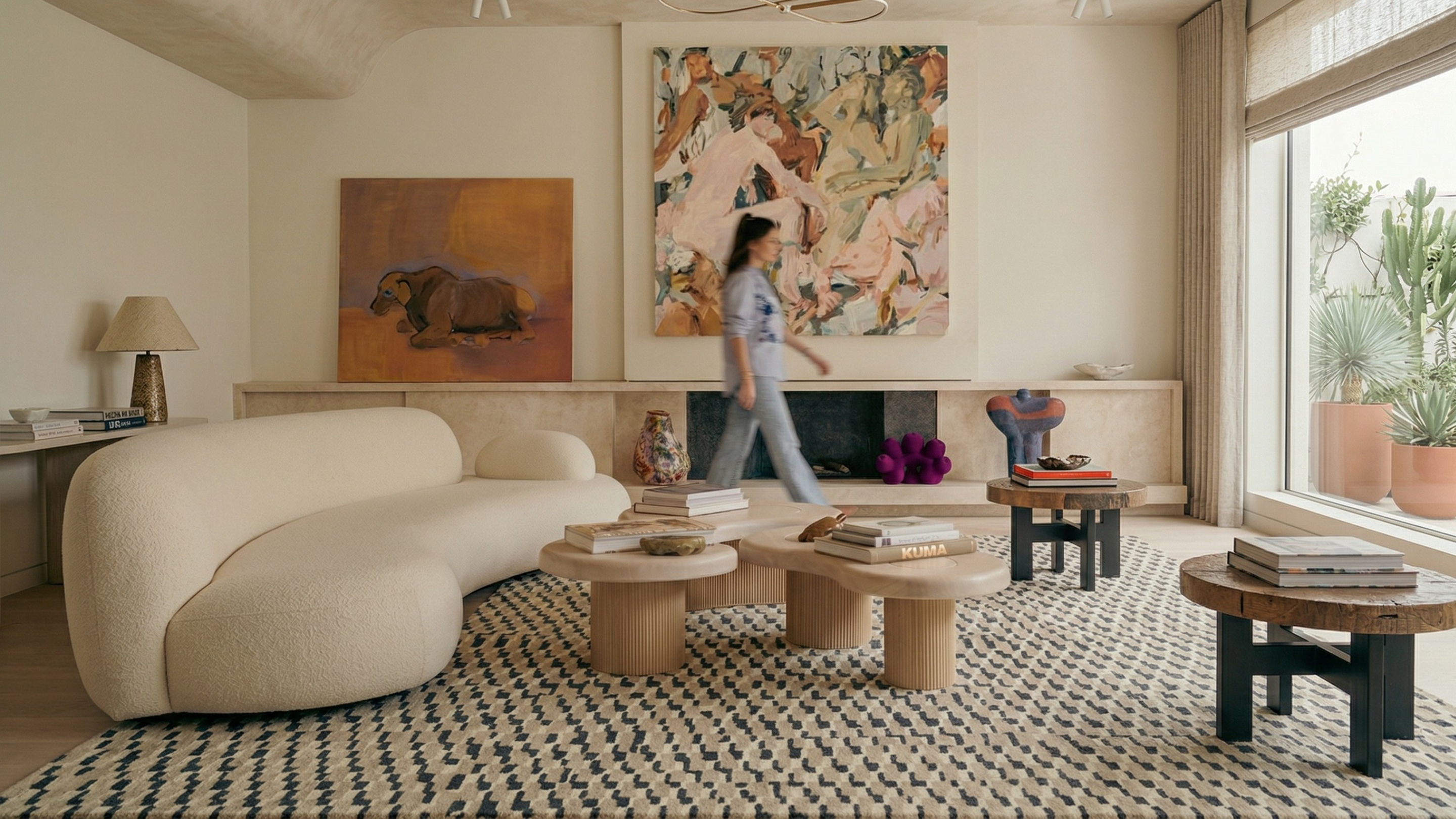
When everything blends into the same tone, the room starts to feel flat. The sofa merges into the rug, the rug fades into the floor, and there is no clear separation between elements. Nothing looks wrong individually, but together the space lacks dimension.
You may not notice it immediately, but when you step back and look at the room from a distance, it feels slightly dull and incomplete.
Stronger interiors take a different approach. Instead of matching everything, they focus on balance.
For example, if the sofa is neutral, a rug with subtle variation in tone or texture can create a soft contrast that adds depth. If the furniture already has strong colors or patterns, a calmer rug can help settle the space and bring visual stability.
A simple way to understand this is through proportion. Most well-balanced spaces follow a natural distribution of tones. One dominant base, a supporting layer, and a smaller accent that adds interest without overpowering the room.
When this balance is maintained, the space starts to feel layered and intentional. It does not rely on exact matching, but on how each element supports the other.
for example
- A light beige sofa paired with an almost identical beige rug often makes the entire seating area blend into one surface. When a slightly deeper or textured rug is used instead, the sofa stands out naturally and the space starts to feel more layered.
- In a room with a bold-colored sofa, adding another strong rug in a similar tone can make the space feel heavy. Switching to a softer, neutral rug helps balance the intensity and makes the overall layout feel more comfortable and visually stable.
Two same rugs can look completely different just because of how they are placed in the room.
Many people place the rug only under the coffee table. It may look fine at first, but it creates a gap between the rug and the sofa or chairs. The rug starts to feel separate, and the furniture does not feel connected to each other.
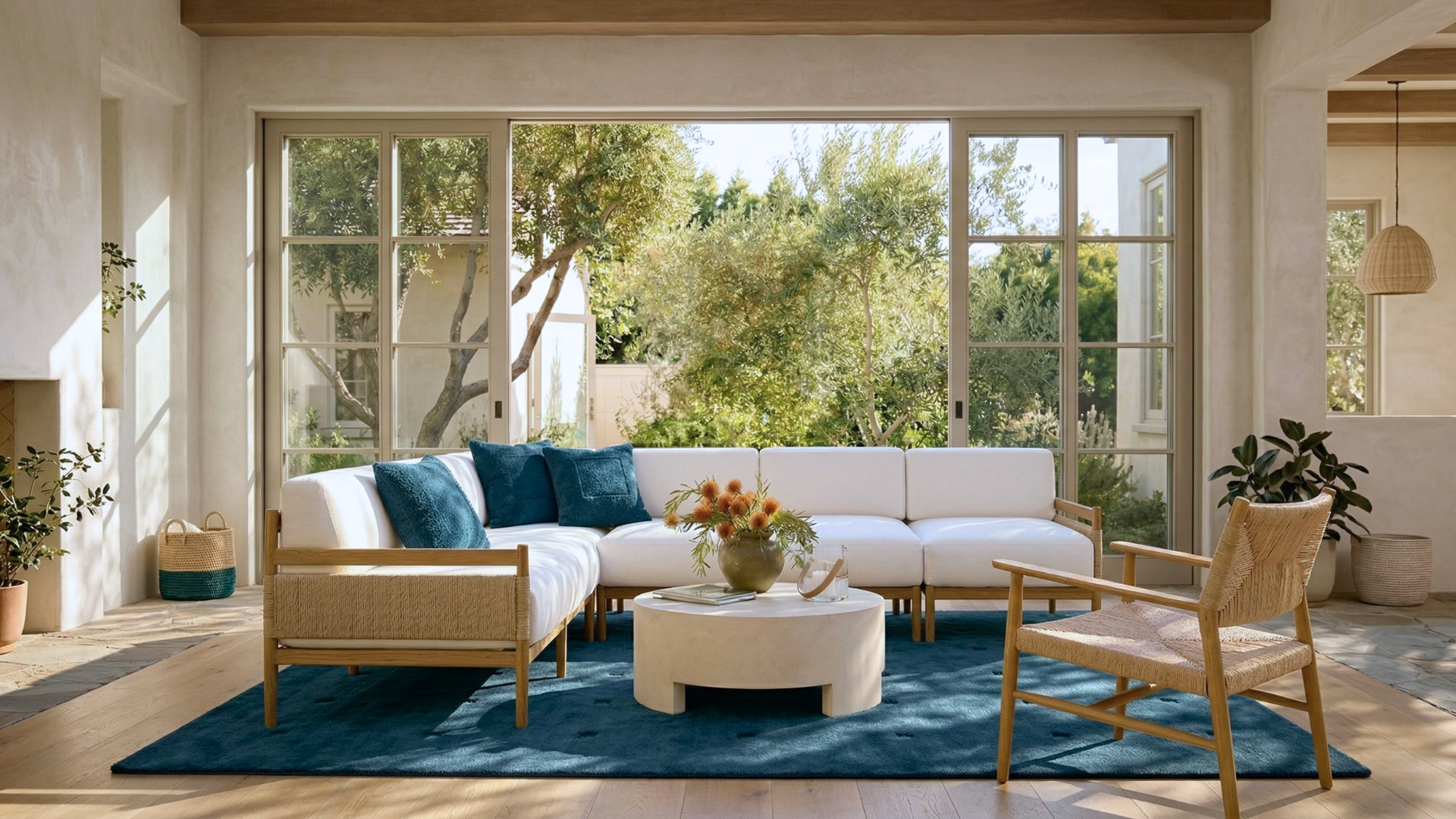
Now imagine the same rug moved slightly so it goes under the front legs of the sofa. Suddenly, the whole seating area starts to come together. Nothing else has changed, but the room feels more complete and balanced.
Placement is not about putting the rug exactly in the center. It is about how the rug works with the furniture and helps everything feel like one setup.
This is where many homes go wrong without realizing it. Everything looks okay, but the room does not feel settled. Most of the time, it is just the placement that needs to be corrected.
Mistake 5: Choosing texture based only on appearance
Texture is not the same in every rug. It changes based on how the rug is made.
Hand knotted rugs feel different, hand tufted rugs feel different, and flatweave rugs feel completely different. But most people ignore this and choose a rug only based on how it looks.
That is where the problem starts.
Every type of rug is made for a different kind of use.
Some people want something soft and comfortable for daily use, so they go for hand tufted rugs. Some want something strong and long-lasting that can stay for years, so they prefer hand knotted rugs. Others want something light, easy to maintain, and practical, so they choose flatweave rugs.
All of them are correct choices, but only if they match your requirement.
For example, if someone buys a flatweave rug thinking it will feel soft like a plush rug, they will feel disappointed. In the same way, if someone places a thick hand tufted rug in a high-traffic area without thinking about maintenance, it can become difficult to manage.
That is why understanding texture is important.
You are not just choosing how the rug looks. You are choosing how it will feel, how it will behave, and how it will perform in your space over time.
Mistake 6: Using heavy patterns in already busy rooms
Patterns can make a room look rich and interesting, but only when the space has room for them.
The problem starts when everything in the room is already doing too much. A patterned sofa, printed cushions, textured curtains, wall art, and then another heavy patterned rug on top of that. Individually, all of these may look good, but together they start fighting for attention.
When this happens, the eye keeps moving and does not find a place to settle. The space begins to feel noisy instead of comfortable.
In one setup I saw, the room had strong elements everywhere. The rug was also bold with multiple patterns, and instead of enhancing the space, it made everything feel crowded. When that rug was replaced with a more subtle design, the same furniture and decor started to look better without changing anything else.
This is where understanding balance becomes important.
If the room already has patterns and textures, the rug should act as a calmer base. It should support the space, not compete with it. On the other hand, if the room is simple and neutral, a patterned rug can become the main highlight and bring life into the space.
The idea is not to avoid patterns, but to use them at the right place.
A good rug does not try to stand out at any cost. It works with the room so that everything feels balanced, easy on the eyes, and comfortable to live in.
Mistake 7: Ignoring lighting and undertones in living room rugs
One of the most overlooked factors when choosing a rug is how lighting affects its color.
A rug that looks perfectly neutral in the showroom can feel completely different once it is placed at home. It may appear slightly yellow, grey, or even dull depending on the lighting in your space. The rug itself is not wrong. The environment around it is changing how it looks.
Natural daylight, warm artificial lights, and even wall colors all influence this shift.
Take a simple example. You choose a soft beige rug. In the showroom, it looks clean and balanced. You bring it home, and during the day it still feels right. But in the evening, once the warm lights turn on, that same rug starts looking more yellow or slightly orange. Nothing about the rug has changed, only the light source.
This is why many people feel their rug looked better in the store or in photos but feels slightly off once it is placed at home.
The real reason behind this is undertones.
Every rug has a base tone beneath its surface color. Some lean warm, moving towards yellow or orange. Some lean cool, shifting towards grey or blue. And some stay neutral, sitting in between.
When the undertone of the rug matches your room’s lighting, it feels natural throughout the day. When it does not match, the rug starts to feel slightly wrong, even if you cannot immediately explain why.
A simple way to understand this:
- In rooms with warm lighting, a neutral or slightly cool-toned rug helps balance the space
- In rooms with white or cooler lighting, a rug with a bit of warmth prevents the space from feeling flat
- In rooms with strong natural sunlight, neutral tones usually stay the most consistent
The easiest way to avoid this problem is to check the rug in your actual environment. What looks right in one type of light should still feel right in another.
A good rug is not the one that looks best in a showroom. It is the one that stays right in your home, at every time of the day.
Mistake 8: Choosing rugs without considering Indian living conditions
Many guides focus only on how a rug looks, but real homes work very differently from styled spaces.
In Indian homes, living rooms are used actively throughout the day. People walk in and out frequently, dust is more common, and furniture is often moved or adjusted depending on use. Because of this, a rug that looks perfect in a showroom may not behave the same way once it is placed at home.
This is where most decisions go wrong.
For example, a very delicate rug might look clean and premium in a controlled setting, but in a home with regular foot traffic, it may start showing wear quickly or require more maintenance than expected. On the other hand, a slightly more practical rug with a balanced surface can handle daily use while still looking good.
The goal is not to compromise on design, but to choose something that fits how the space is actually used.
In many homes, the living room is not just for display. It is where people sit daily, guests are welcomed, and movement happens constantly. The rug needs to support this lifestyle instead of becoming something that is difficult to manage.
This becomes even more important when buying rugs online for living room spaces in India. You cannot touch or test the rug before purchasing, so understanding how it will perform in real conditions helps avoid disappointment later.
A good choice is not just about how the rug looks on day one, but how it continues to feel and function after months of regular use.
Mistake 9: Not anchoring the furniture properly
Furniture that sits completely outside the rug creates a disconnected layout.
It feels like each piece is placed randomly instead of being part of a single composition.
Even a slight overlap between the rug and furniture can change the perception of the entire room.
Anchoring does not require full coverage. It requires intentional positioning.
Once the furniture starts relating to the rug, the room begins to feel structured.
Mistake 10: Choosing price over long-term value
It is very easy to choose the lowest price option, especially when many rugs look similar online. On the screen, most designs appear almost the same, so the cheaper option feels like the smarter decision.
But the difference starts to show after you begin using the rug.
Over time, material and construction begin to matter more than appearance. Some rugs may start losing their shape, the surface may flatten unevenly, or the color may fade faster than expected. Even the feel underfoot can change, going from soft to slightly rough with regular use.
In one case, a rug looked perfect when it was first placed. Within a few months, the texture started to lose its depth, and the overall look of the room felt weaker. Nothing else in the space had changed, but the rug was no longer supporting the setup the way it did initially.
This is where focusing only on price becomes a problem.
Instead of asking what costs less, it helps to think about how the rug will perform over time. A better way to decide is to consider a few simple things:
- how often the rug will be used in daily life
- how long you expect it to last without losing its look
- how it should feel every day, not just when it is new
When you think in terms of usage instead of just price, the decision becomes clearer.
A well-chosen rug may not always be the cheapest option, but it continues to support the space for a longer time. That consistency is what creates a better overall experience and makes the room feel complete even after months of use.
How to instantly upgrade your living room rug setup
If your setup feels off, you don’t always need a new rug. In most cases, the problem is small and fixable.
Start by looking at how your rug is placed. If it is sitting only in the center, move it slightly so it connects with your sofa. Even touching the front legs can change the entire feel of the space.
Next, check alignment. If your furniture looks scattered, bring it closer so everything feels part of one setup instead of separate pieces.
Now look around the rug. If there is too much happening with decor, cushions, or patterns, the rug loses its impact. Clearing a little space around it makes the whole area feel calmer.
Color also plays a role. If everything is matching too closely, the room starts to feel flat. A little contrast through the rug or nearby elements can add depth without making it look busy.
And finally, size. If the rug feels like it is floating, it is probably too small. A better-sized rug that sits under the furniture will immediately make the room feel more complete.
These are simple changes, but they work fast. You are not redesigning the room, you are just correcting what is already there.
Why the rug decides the entire space
A living room is not defined by furniture alone.
It is defined by how everything comes together.
The rug is the element that connects the layout, controls the balance, and shapes the experience of the space.
When chosen and placed correctly, it does not just sit in the room. It brings the room together in a way that feels complete.
If you start looking at rugs for living room design from this perspective, the difference becomes clear immediately.
FAQS
1. What size rug is best for a living room?
The best size depends on your layout, but in most cases, larger rugs work better for living rooms. Sizes like 8x10 and 9x12 are commonly used because they can hold the seating area properly. Ideally, the rug should connect with your furniture, either under the front legs of the sofa or covering the full setup. Smaller sizes like 5x8 can work in compact spaces, but using a rug that is too small often makes the room feel disconnected.
2. Should a living room rug go under the sofa?
Yes, at least partially. A rug should not sit separately in the center. Placing it under the front legs of the sofa helps anchor the furniture and creates a more connected and balanced layout.
3. How do I choose the right rug color for my living room?
Instead of matching everything, focus on balance. If your furniture is neutral, you can add slight variation through the rug. If your furniture is bold, choose a calmer rug to balance the space. Also consider your room lighting, as it can change how the rug color appears.
4. Which rug material is best for daily use in a living room?
It depends on your usage. For regular use, hand tufted rugs offer a good mix of comfort and durability. For long-term investment, hand knotted rugs are a strong option. If you want something lightweight and easy to maintain, flatweave rugs work well.
5. Why does my rug look different at home than in the store?
Lighting is the main reason. Natural light, warm bulbs, and wall colors can all change how a rug looks. A rug may appear neutral in a showroom but look warmer or cooler in your home depending on the lighting conditions.
6. How can I make my living room rug look more expensive?
Focus on size, placement, and balance. A properly sized rug placed under furniture, with the right color contrast and minimal clutter around it, can make the entire room feel more refined without changing everything else.