Cart
0
Best Rugs for Black Interiors: How to Balance Dark Walls and Bold Furniture
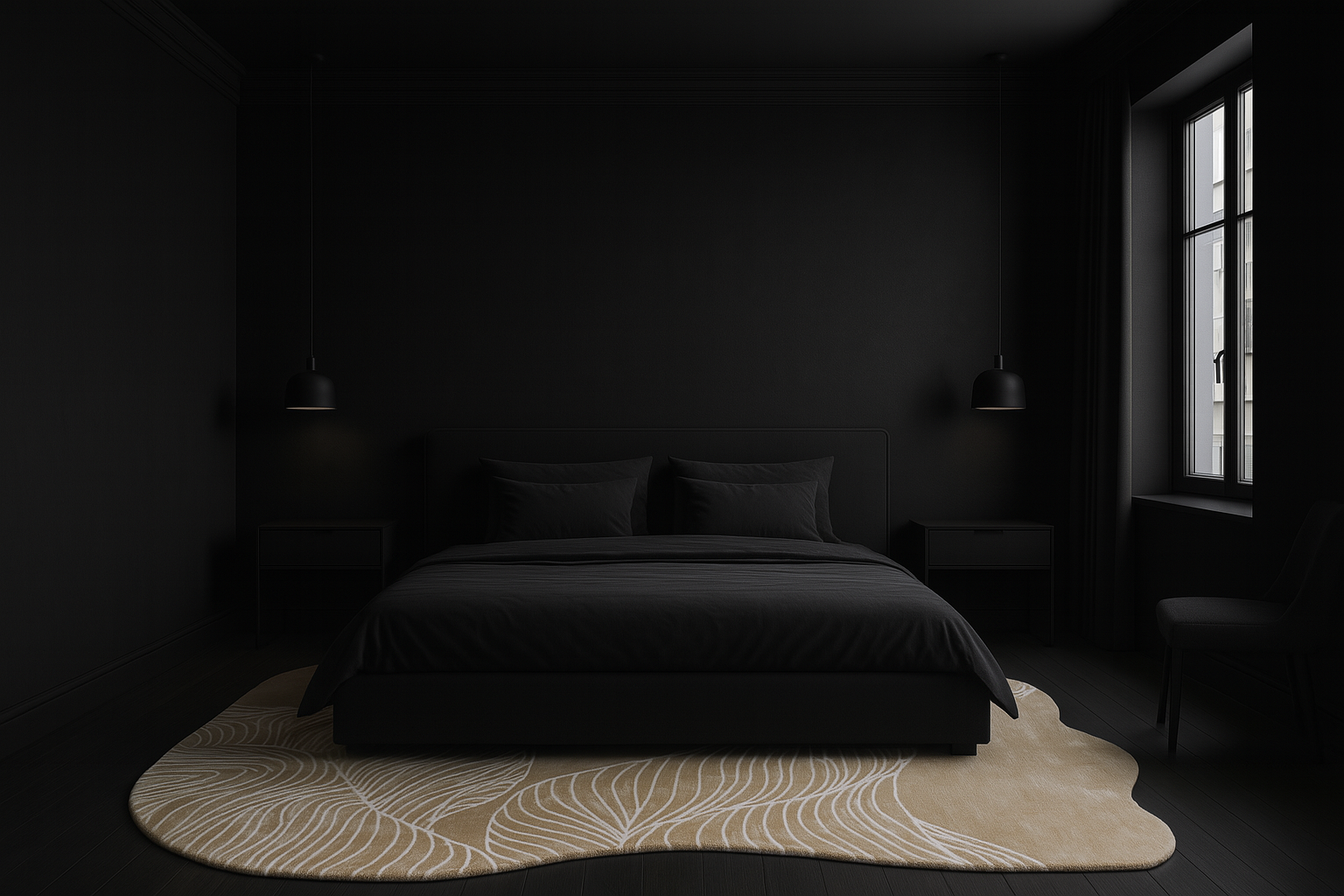
Black interiors are bold, architectural, and emotionally powerful. But without the right balance, they can feel heavy or visually closed in. The best rugs for black interiors are neutral-toned wool rugs, textured hand tufted rugs, subtle patterned area rugs, and even a well-chosen ivory rug that introduces softness without overpowering dark walls or furniture. The key lies in contrast, scale, texture, and lighting awareness.
This guide blends real project insights with structured design strategy to help black-themed spaces feel layered, warm, and intentionally composed.
It flows naturally, no forced insertion, and strengthens semantic relevance.

Understand Your Interior Before Choosing the Right Rug
The most successful rugs in dark interiors typically fall into five categories:
• Light neutral rugs for contrast
• Textured rugs for softness
• Muted accent-colored rugs for warmth
• Large-scale rugs for grounding
• Matte finishes instead of glossy surfaces
These principles prevent visual heaviness while maintaining the dramatic strength of black décor.
Step One: Study the Interior Before Choosing the Rug
Not all black interiors behave the same way.
Some spaces use black as the dominant envelope. Others incorporate black through sofas, shelving, or accent walls. Lighting conditions, room function, and layout determine which rug direction will succeed.
Consider Lighting First
Rooms with abundant daylight can accommodate deeper rug tones such as charcoal or muted navy. Dimly lit interiors benefit from lighter rugs in ivory, sand, or soft grey to prevent compression of space.
Understand Room Purpose
Bedrooms require softness and warmth.
Living rooms need grounding and cohesion.
Dining areas demand durability and structure.
When color, light, and function align, the rug completes the room rather than competing with it.

Fully Black Rooms: Use Contrast to Create Breathing Space
In fully black interiors, the rug becomes the visual relief point.
Light neutral rugs consistently perform best in these environments. Ivory, warm beige, oatmeal, and soft greys reflect light and introduce dimensional contrast. However, stark white can feel disconnected and overly sharp.
The most effective choices include:
• Textured wool rugs
• Cut-and-loop patterns
• Subtle abstract designs
• Distressed matte finishes
Avoid glossy surfaces. They disrupt the moody elegance.
Clients often describe this change as transformative. The room shifts from intense to composed simply through balanced flooring contrast.
Light vs Dark Rugs in Black Interiors
Light Rugs
• Open up visually heavy rooms
• Reflect both natural and artificial light
• Add softness without losing drama
Dark Rugs
• Work best in large, well-lit spaces
• Require texture to avoid flatness
• Add luxury when layered thoughtfully
The decision is not about brightness alone. It is about balance relative to light and scale.
Bedrooms with Black Furniture: Prioritize Comfort and Layering
Black beds, wardrobes, and nightstands create a strong foundation. The rug’s role is to soften and humanize that structure.
From real design experience, these choices work best:
• Wool or silk-blend rugs for warmth
• Tonal or low-contrast patterns
• Medium to high pile for underfoot comfort
In one project, a muted blue floral rug softened a matte black canopy bed beautifully. In another, a textured beige rug balanced a black leather headboard without harsh contrast.
The objective is not to make a statement. It is to create emotional ease.
Black Interiors with Garden or Balcony Views: Bridge Nature and Structure
When black metal frames and dark finishes meet greenery outside, the rug becomes the connector.
Natural fiber rugs such as jute and wool introduce organic warmth. Earth-based tones like olive, clay, rust, or warm sand echo exterior landscapes.
Design considerations:
• Choose visible weave textures
• Avoid loud multi-color patterns
• Use flatweaves in high-traffic balcony areas
• Select sizes large enough to unify furniture
This approach preserves drama while adding grounded authenticity.
Dining Areas with Black Decor: Structured Elegance
Dining spaces with black tables or accent walls require rugs that are both functional and refined.
Best choices:
• Low-pile or flat-weave rugs
• Subtle geometric or grid patterns
• Muted warm neutrals
The rug should extend far enough that chairs remain on it when pulled out. Slightly larger rugs create stability and intentional design.
Avoid high-pile textures. They disrupt movement and maintenance.
Rug Size and Placement Rules in Dark Interiors
In black-themed rooms, scale matters more than brightness.
Living Rooms
At minimum, front legs of seating should rest on the rug. In larger spaces, full furniture placement on the rug creates cohesion.
Bedrooms
Extend rugs generously beyond the bed edges. Small decorative rugs at the foot often fail to balance strong dark furniture.
Dining Rooms
Ensure chairs stay on the rug when extended. Leave 12–18 inches of visible flooring beyond furniture framing.
In dark interiors, grounding comes from proportion, not color alone.
Accent Colors: Introduce Warmth Without Breaking Elegance
Black interiors can feel static if not layered with subtle warmth.
Accent tones that work beautifully:
• Mustard
• Forest green
• Rust
• Blush
• Deep burgundy
These tones should appear integrated within the weave rather than sharply contrasting. Subtle infusion adds emotional rhythm without overpowering the architecture.
From experience, even a slight rose or muted blue undertone can transform a space from rigid to soulful.
Common Mistakes to Avoid
• Rugs that are too small
• Overly glossy finishes
• Extremely busy patterns
• Very dark rugs in dim rooms
• Stark white rugs that disconnect visually
Dark interiors demand intentional restraint.
Final Design Perspective
Black interiors carry undeniable magnetism. When layered correctly, they feel refined, immersive, and intimate. The right rug becomes the balancing force—adding texture, warmth, and dimensional clarity.
It is not about overpowering darkness. It is about giving it room to breathe.
Texture softens.
Scale grounds.
Tone balances.
That is the formula for making black interiors feel both bold and livable
FAQs
What rug color works best in black-themed rooms?
Light neutrals such as ivory, sand, beige, and soft grey provide contrast and balance. Muted jewel tones also complement black décor effectively.
Should rugs in black interiors always be light?
No. In well-lit rooms, darker rugs with visible texture can add depth. The key is ensuring sufficient light and scale balance.
What rug pile works best?
Low to medium pile works well in living and dining areas. Bedrooms benefit from higher pile textures for comfort.
Can patterned rugs work with black décor?
Yes, if patterns are subtle. Geometric, abstract, or softly distressed designs integrate best.
How do rugs make dark rooms feel larger?
Lighter shades, visible texture, and generous sizing reflect light and reduce visual compression.
6. What rug color works best in black-themed rooms?
Light neutrals such as ivory, sand, beige, and soft grey work best because they create contrast and brighten the space. Muted jewel tones like forest green or rust can also complement black décor without overwhelming it.
About the author
Afzal Rub is an interior designer who graduated from Pearl Academy of Design with a degree in Textile Interior Design in 2016. He then began his career in New Delhi City by spearheading his own design firm decordec, which handles various high-end design projects in India and beyond. His work has been featured in celebrity homes and he is known for his characteristic of being a tastemaker in the carpet world.
In 2019, Afzal opened his own Decordec, a creative ecosystem for collaboration and development, focusing on experimentation, craftsmanship and technique. Here, artists come together to narrate tales of evolving aesthetics. Decordec is particularly known for its geometry, materiality, and simple aesthetic.
Furthermore, amid a global pandemic that has brought the entire world to a standstill, Afzal wanted to create a formalised body of change amongst designers and has been able to conceptualise and collaborate to launch.
In 2019, Afzal opened his own Decordec, a creative ecosystem for collaboration and development, focusing on experimentation, craftsmanship and technique. Here, artists come together to narrate tales of evolving aesthetics. Decordec is particularly known for its geometry, materiality, and simple aesthetic.
Furthermore, amid a global pandemic that has brought the entire world to a standstill, Afzal wanted to create a formalised body of change amongst designers and has been able to conceptualise and collaborate to launch.
written by Talha Ansari