Cart
0
How to Choose the Right Rug Size When Space Is Limited
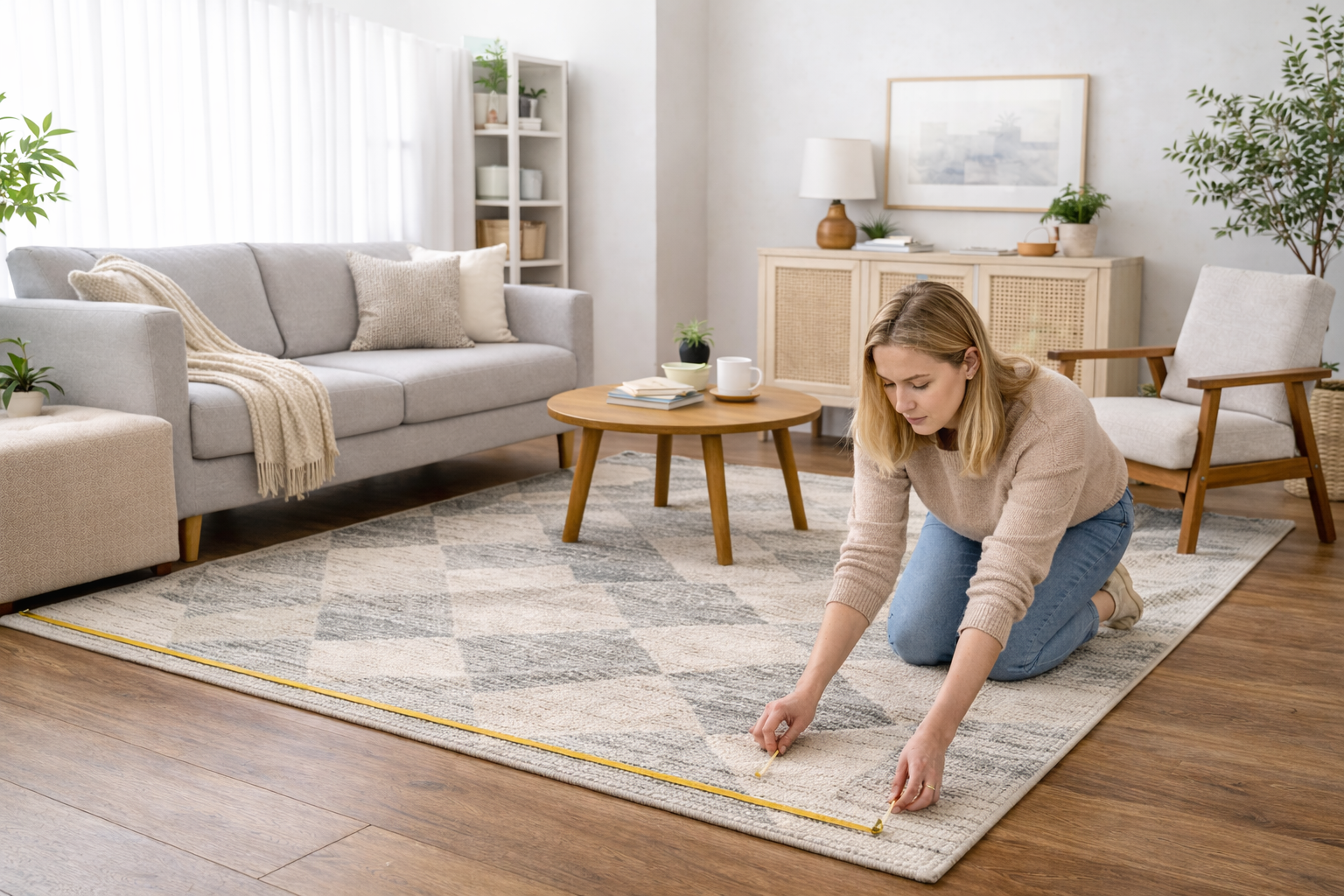
In smaller rooms, every design decision carries more weight. What might feel like a minor choice in a large space can completely change how a compact room looks and functions. Rugs are one of those decisions. When the size is right, a room feels balanced and comfortable. When it’s wrong, the space can feel awkward, crowded, or unfinished.
The mistake most people make is assuming rug size is about numbers alone. In reality, it’s about how the room behaves. A rug should support movement, furniture placement, and daily routines without drawing unnecessary attention to itself. Especially in limited spaces, a rug works best when it quietly holds everything together.

Look at How the Space Lives Before You Measure Anything
Instead of reaching for a measuring tape first, spend a moment observing the room. Where do people naturally walk? Where do they pause? Which parts of the floor are actually used, and which parts simply exist?
In bedrooms, the area where you step down from the bed often matters more than the far corners of the room. In small seating areas, the space between chairs or under a coffee table carries more visual importance than covering the entire floor.
When you approach rug sizing this way, the decision becomes clearer. Smaller formats like 3x5 rugs make sense because they serve a specific purpose rather than trying to solve the whole room at once. They add comfort and definition exactly where it’s needed, without interrupting the flow of the space.

Why Bigger Rugs Can Make Small Rooms Feel Heavier
There’s a common belief that larger rugs automatically make a room feel more complete or well designed. In compact spaces, this idea can often backfire. When a rug stretches too close to every wall, it removes visual contrast and causes the room to feel compressed rather than open. Instead of supporting the layout, the rug starts to dominate it.
Leaving some floor visible around a rug allows the eye to clearly understand the boundaries of the space. This negative space creates breathing room and helps the rug feel intentional instead of overwhelming. This becomes especially important when using the rectangular rugs as its straight edges can easily exaggerate tight proportions if the size is not chosen carefully.
For rooms that need a bit more structure, such as a small living area with multiple pieces of furniture, sizes like 4x6 rugs often offer a better balance. They provide enough surface to ground the seating arrangement while still respecting the limits of the room. The goal isn’t maximum coverage. It’s visual balance. Cleaner rhythm. that keeps the space comfortable and well proportioned.

Furniture, Not Walls, Should Guide Rug Size
One of the most overlooked aspects of rug selection is how furniture interacts with it. Walls are static, but furniture is what people engage with every day. That’s why rug size should respond to furniture placement, not room dimensions.
A rug should either clearly support furniture or intentionally sit beside it. Half-on, half-off placements tend to feel accidental unless they’re very carefully planned. In small rooms, clarity matters more than creativity.
This principle applies regardless of construction. Whether if someone prefers a hand tufted rugs for their softness or hand knotted rugs for their detailing, the rug will only look right if it fits naturally with the furniture around it. Design can enhance a space, but proportion is what makes it feel resolved.

Break the Room Into Purposeful Zones
Compact spaces benefit from being mentally divided into zones. Instead of designing the room as one open area, think about how different activities happen within it.
A rug beneath a coffee table establishes a seating zone.
A rug beside the bed creates a comfort zone.
A rug near the entry marks a transition.
This approach reduces visual clutter and gives each part of the room a clear role. Rugs become tools for organization rather than decoration alone. Zoning also makes it easier to adjust layouts over time, since each rug supports a specific function rather than the entire room.
Mistakes That Make Small Rooms Feel More Restricted
One common mistake is choosing a rug solely based on how it looks online, without considering placement. Another is selecting a bold design in an attempt to add character, only to realize it dominates the room.
Another frequent issue is matching rug size to the room instead of the furniture. Furniture is what defines how space is used, and rugs should respond to that interaction.
In compact rooms, restraint almost always leads to better results than excess.
How to Buy a Rug Without Second-Guessing Yourself
Confidence in rug buying comes from understanding intent. When you know what the rug is meant to do add comfort, define a seating area, or create visual balance the right size becomes easier to identify.
The best rugs don’t demand attention. They fit into the space naturally, support everyday movement, and make the room feel settled rather than styled.
When proportion is right, everything else aligns. Furniture feels properly placed, the room feels calmer, and the rug feels like it belongs.
Why Smaller, Flexible Sizes Often Work Best
Smaller rug sizes are often underestimated, but they offer one major advantage: flexibility. They can move between rooms, adapt to new layouts, and continue to feel relevant as needs change.
In compact spaces, flexibility is a strength. A rug that can evolve with the room often proves more valuable than one that fits only a single layout.
FAQS
1. How do I know if a rug is too big for a small room?
If the rug touches or almost touches every wall, it’s usually too big. In small rooms, some visible floor space around the rug helps the room feel open and balanced. A rug should support the furniture, not overpower the entire space.
2. Is it better to choose a smaller rug or no rug at all in compact spaces?
A smaller rug is almost always better than no rug. Even in tight spaces, a well-placed rug adds warmth, structure, and comfort. The key is choosing a size that fits the furniture layout instead of trying to cover the whole floor.
3. Should a rug go under furniture or sit beside it in small rooms?
Both can work, as long as it looks intentional. A rug can sit under the front legs of furniture or be placed clearly beside key pieces like beds or chairs. What matters is avoiding half-on, half-off placements that look accidental.
4. Do light or dark rugs work better in small spaces?
Lighter and neutral tones generally make compact rooms feel more open, but size and placement matter more than color. A correctly sized rug in a darker shade can still work well if it doesn’t dominate the space.
5. Can one rug size work in more than one room?
Yes, flexible rug sizes are ideal if you like to rearrange or move homes. Rugs that fit comfortably beside beds, under small seating areas, or in reading corners tend to adapt well to different spaces over time.
6. Should I decide rug size before choosing the design?
Always decide the size first. Even the most beautiful rug won’t look right if the proportions are off. Once the size fits naturally with the furniture and room flow, choosing a design becomes much easier.
About the author
Afzal Rub is an interior designer who graduated from Pearl Academy of Design with a degree in Textile Interior Design in 2016. He then began his career in New Delhi City by spearheading his own design firm decordec, which handles various high-end design projects in India and beyond. His work has been featured in celebrity homes and he is known for his characteristic of being a tastemaker in the carpet world.
In 2019, Afzal opened his own Decordec, a creative ecosystem for collaboration and development, focusing on experimentation, craftsmanship and technique. Here, artists come together to narrate tales of evolving aesthetics. Decordec is particularly known for its geometry, materiality, and simple aesthetic.
Furthermore, amid a global pandemic that has brought the entire world to a standstill, Afzal wanted to create a formalised body of change amongst designers and has been able to conceptualise and collaborate to launch.
In 2019, Afzal opened his own Decordec, a creative ecosystem for collaboration and development, focusing on experimentation, craftsmanship and technique. Here, artists come together to narrate tales of evolving aesthetics. Decordec is particularly known for its geometry, materiality, and simple aesthetic.
Furthermore, amid a global pandemic that has brought the entire world to a standstill, Afzal wanted to create a formalised body of change amongst designers and has been able to conceptualise and collaborate to launch.
written by Talha Ansari