Cart
0
8x10 vs 9x12 rugs: which size works better for your living room ?
Many living rooms feel almost complete but never fully settled. The furniture is right, the lighting works, and the layout makes sense, yet something feels slightly off. In most cases, the issue is not color or decor. It is scale. More specifically, it is the rug size.
A rug does more than cover the floor. It sets the boundaries of a space and decides how furniture connects visually over time. Rectangular rugs in particular play a key role in shaping how comfortable and balanced a room feels. Among the many rug sizes available, 8x10 and 9x12 are the two most commonly considered for living spaces. Both are suitable, but they create very different results once placed in real homes.
This guide looks at how these two sizes work in everyday interiors, focusing on space, furniture, and movement rather than rigid rules.

What Size Rug Should You Choose for a Room
The right rug size depends on how your furniture is arranged, especially when deciding what size rug for a room.
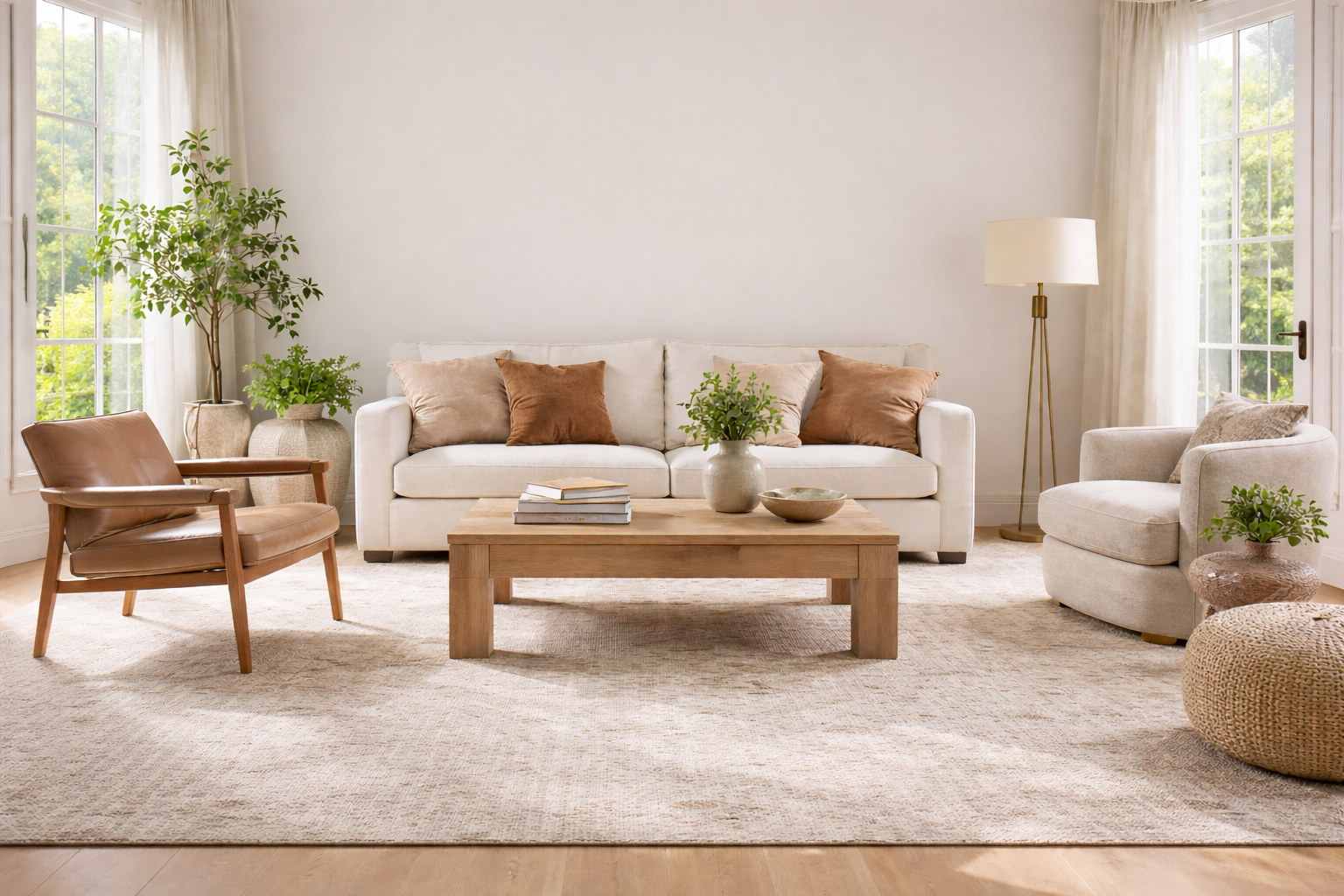
In most living rooms, an 8x10 rug works well when seating is placed close together and some floor remains visible. A 9x12 rug is better for larger rooms or sectionals, as it allows all furniture to sit on the rug and creates a more connected look. As a simple rule, the rug should extend beyond the edges of your seating area while leaving some space between the rug and walls.
Why rug size matters in interior spaces
Rug size affects proportion more than any other element in a room. It influences how furniture sits together and how the eye moves across the space. When the size feels right, the room feels calm and balanced. When it feels wrong, even well-designed furniture can appear disconnected.
A rug that is too small breaks visual flow. Seating pieces feel scattered rather than grouped. A rug that is too large for the room can feel heavy and overpowering. The goal is not to fill space, but to support it.
Understanding how 8x10 and 9x12 rugs behave helps make the decision feel clearer and more confident.

How an 8x10 rug supports everyday living rooms
An 8x10 rug works well in many standard living rooms because it offers balance without taking over the space. This size usually allows the front legs of sofas and chairs to rest on the rug, while the back legs stay on the floor.
When this size feels comfortable
This partial placement creates connection between seating pieces while keeping the room open. The visible floor around the rug helps maintain lightness, which is especially useful in apartments or homes where the living area connects to other rooms.
An 8x10 rug also allows flexibility. Furniture can be adjusted without disrupting the overall balance. This makes it a practical choice for homes where layouts change or rooms serve more than one purpose.

In spaces with modest seating arrangements, this size feels natural and easy to live with.
When an 8x10 rug starts to feel small
In larger rooms, furniture tends to spread out. Sofas are deeper and seating areas are wider. In these situations, an 8x10 rug may no longer reach all key furniture pieces.
When sofas or chairs barely touch the rug, the seating area can feel visually disconnected. This often happens with sectional seating, where only one part of the sofa sits on the rug while the rest floats outside it.
At this point, the rug stops anchoring the space and starts feeling decorative rather than functional.
What a 9x12 rug changes in a living room
A 9x12 rug creates a stronger sense of structure. It allows most seating furniture to sit fully on the rug, bringing everything together into one clear zone.
How larger rugs affect spatial balance
In spacious living rooms, this size prevents furniture from drifting apart visually. The seating area feels intentional and grounded. Because more floor is covered, the room often feels warmer and more settled.
This size works particularly well in open layouts. A larger rug helps define the living area without the need for walls or dividers, creating clarity without closing off the space.
Understanding the trade-off
A 9x12 rug offers less flexibility than a smaller size. Once placed, it establishes a strong boundary. For many homes, this is a benefit rather than a drawback. It gives the room a sense of purpose and stability that smaller rugs cannot always provide.
Choosing between 8x10 and 9x12 based on room scale
To calculate the right rug size, measure your seating area instead of the full room.
The rug should extend at least 6 to 12 inches beyond your sofa and chairs to create a balanced look.
Leave around 12 to 18 inches of space between the rug and the walls so the room does not feel crowded.
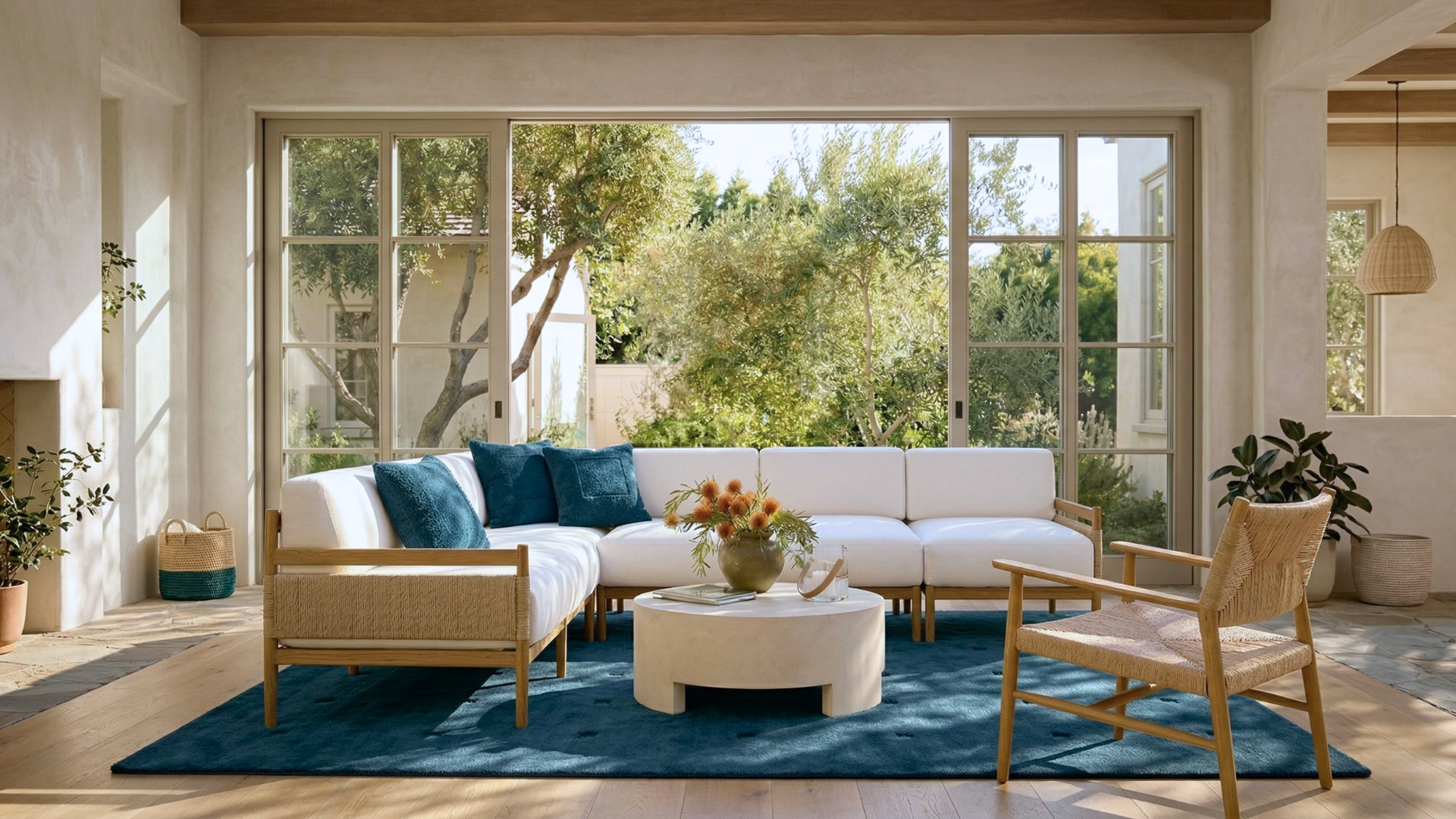
For sectionals or larger layouts, choose a rug that covers the full seating area to keep everything visually connected.

Room size is a helpful reference, but it should not be the only factor.
In compact or medium-sized living rooms, an 8x10 rug often feels lighter and more appropriate. It supports the furniture without crowding the space. In larger rooms with generous seating, a 9x12 rug usually feels more comfortable and visually balanced.
The decision becomes clearer once furniture is in place. The right rug size supports the layout rather than fighting it.
Furniture Placement Tips
• Keep at least the front legs of sofas and chairs on the rug to visually connect the seating area.
• In larger rooms, allow all furniture legs to sit fully on a 9x12 rug to create a grounded and cohesive layout.
• Leave 12 to 18 inches of visible floor between the rug edge and the walls for balanced proportion.
• For sectional sofas, choose a rug that extends beyond both ends of the seating to avoid a floating effect.
• Ensure the coffee table sits fully on the rug, centered within the seating arrangement.
• In open layouts, align the rug with the main seating zone rather than the entire room footprint.
• Avoid rugs that only touch one furniture piece, as this disrupts visual flow.
• Maintain symmetry where possible by aligning rug edges parallel to walls and furniture lines.
Why furniture layout matters more than measurements

Two rooms of the same size can need different rugs. The difference usually lies in how furniture is arranged.
A tightly grouped seating layout can sit comfortably on an 8x10 rug. A layout where seating spreads out benefits from more coverage. Sectional sofas almost always feel better when placed on a larger rug, as this keeps the seating area unified.
Numbers matter less than relationships between objects.
How People Actually Decide Between 8x10 and 9x12 Rugs (Without Realizing It
Most people don’t choose based on measurements. They choose based on how the room feels.
If the rug leaves some floor visible and only touches the front legs of the sofa, the space feels open. That’s where an 8x10 usually works.
If the rug holds all the furniture together and covers more area, the room feels complete and settled. That’s where a 9x12 fits better.
In simple terms, people are not choosing a size. They are choosing between an open look and a more grounded look.
How rug size influences the mood of a space
Smaller rugs tend to make spaces feel open and flexible. Larger rugs create a sense of grounding and comfort. Neither effect is better than the other. They simply suit different ways of living.
Some homes benefit from openness and movement. Others feel better with clear boundaries and structure. Rug size quietly supports these emotional qualities.
Applying the Same Thinking to Dining Spaces
Rug size plays a different role under a dining table. Here, movement becomes just as important as placement.
A dining rug should extend far enough beyond the table so chairs remain fully on the rug, even when pulled out. If the rug is too small, chair legs catch the edge and disrupt daily use. This is where larger sizes often feel more comfortable and practical.
In compact dining areas, smaller rugs can work if the table is modest and seating is limited. But once guests are seated and chairs move frequently, tight proportions become noticeable.
Dining spaces feel better when the rug supports daily movement, not just visual alignment.
Rug Size Considerations in Bedrooms
Bedrooms respond differently to scale. Comfort becomes the priority.
One approach is placing a rug under the lower two-thirds of the bed. This allows soft flooring underfoot while keeping the room visually open. It works especially well in standard bedrooms where space around the bed is limited.
In larger bedrooms, placing the bed and side tables fully on a rug creates symmetry and a sense of calm. The layout feels intentional without adding decorative complexity.
In sleeping spaces, rugs should quietly support rest. They anchor the bed but should not dominate the room.
How Open Layouts Change Rug Decisions
In open-plan homes, rugs function as subtle dividers. They define areas without building walls.
A smaller rug suggests a seating zone while keeping the space visually connected to nearby areas. A larger rug establishes a stronger boundary between living and dining spaces, bringing clarity to expansive layouts.
The decision depends on how much definition the room needs. Open spaces often benefit from slightly larger rugs because they prevent furniture from visually drifting apart.
8x10 vs 9x12 Rug Size Guide for Living Rooms
When choosing between 8x10 and 9x12, think beyond measurements. Consider how your furniture sits and how the room is used.
• Choose 8x10 if your living room is compact or your seating is closely grouped. It keeps the space open while still connecting furniture.
• Choose 9x12 if your room is large, open-plan, or includes a sectional sofa. It anchors the layout and creates stronger visual structure.
• Measure the full seating footprint, not just the room dimensions. The rug should extend beyond the outer edges of key furniture pieces.
• When in doubt, slightly larger often feels more deliberate than slightly smaller.
Why There Is No Single Correct Answer
There is no universal rule for choosing between 8x10 and 9x12 rugs. Homes differ in scale, furniture style, and daily rhythm.
What feels balanced in one space may feel off in another. Good interior decisions respond to context rather than rigid formulas. The most successful rooms are guided by proportion, not by fixed rules.
Final Thoughts
Choosing the right rug size is less about comparison and more about understanding space.
Both 8x10 and 9x12 rugs can create beautiful, balanced interiors when placed thoughtfully. When scale aligns with layout and lifestyle, the room feels settled rather than styled.
That sense of natural ease is what well-designed spaces aim to achieve.
FAQs
What is the difference between an 8x10 rug and a 9x12 rug?
The main difference is coverage. An 8x10 rug works well in standard living rooms where only the front legs of furniture rest on the rug. A 9x12 rug provides more coverage and allows most furniture to sit fully on it, creating a more unified seating area.
How do I know which rug size is right for my living room?
The right rug size depends on how your furniture is arranged. If your seating is closely grouped, an 8x10 rug often feels balanced. If the furniture is spread out or the room is large, a 9x12 rug usually works better by anchoring the space visually.
What is the standard area rug size?
Standard area rug sizes for living rooms are 8x10 and 9x12. Smaller spaces usually work well with 8x10, while larger rooms or open layouts benefit from 9x12 for better coverage and balance.
Can a rug be too large for a living room?
Yes. A rug that is too large for the room can make the space feel heavy and reduce the sense of proportion. The goal is for the rug to support the furniture layout without overwhelming the room.
Do all furniture legs need to sit on the rug?
Not always. In many living rooms, it is common for only the front legs of sofas and chairs to sit on the rug. This approach creates connection while keeping the room open. Full furniture placement works better in larger spaces.
Where can I buy 8x10 and 9x12 rugs online in India?
If you are looking to buy 8x10 or 9x12 rugs online in India, it is best to choose a store that clearly explains rug sizes, materials, and placement suitability. Decordec offers a curated selection of these sizes, designed for living rooms and larger interiors, with detailed descriptions to help buyers choose confidently.
Does rug size affect how a room feels?
Yes. Smaller rugs tend to make a room feel lighter and more flexible, while larger rugs create a sense of grounding and comfort. The right size depends on the mood you want the space to have.
Are rectangular rugs suitable for most living rooms?
Rectangular rugs work well in most living rooms because they align naturally with furniture layouts and room shapes. They help define seating areas and create visual balance when sized correctly.
About the author
Afzal Rub is an interior designer who graduated from Pearl Academy of Design with a degree in Textile Interior Design in 2016. He then began his career in New Delhi City by spearheading his own design firm decordec, which handles various high-end design projects in India and beyond. His work has been featured in celebrity homes and he is known for his characteristic of being a tastemaker in the carpet world.
In 2019, Afzal opened his own Decordec, a creative ecosystem for collaboration and development, focusing on experimentation, craftsmanship and technique. Here, artists come together to narrate tales of evolving aesthetics. Decordec is particularly known for its geometry, materiality, and simple aesthetic.
Furthermore, amid a global pandemic that has brought the entire world to a standstill, Afzal wanted to create a formalised body of change amongst designers and has been able to conceptualise and collaborate to launch.
In 2019, Afzal opened his own Decordec, a creative ecosystem for collaboration and development, focusing on experimentation, craftsmanship and technique. Here, artists come together to narrate tales of evolving aesthetics. Decordec is particularly known for its geometry, materiality, and simple aesthetic.
Furthermore, amid a global pandemic that has brought the entire world to a standstill, Afzal wanted to create a formalised body of change amongst designers and has been able to conceptualise and collaborate to launch.
written by Talha Ansari