Cart
0

What a 5x8 Rug Really Means in a Home
At first glance, this size may seem straightforward, but it behaves very differently once placed inside a room. Measuring roughly 152 by 244 centimeters, it is often misunderstood as something that should cover a large portion of the floor. In reality, it is designed to define a space rather than fill it entirely.
This size works best when you start thinking of it as a way to organize the room instead of trying to cover the entire floor. In most Indian homes, especially apartments or medium-sized layouts, it fits naturally into areas where furniture already occupies a good portion of the space. Instead of competing with furniture, it quietly supports it.
Once you understand that it is meant to create a zone rather than dominate the room, the decisions around placement, design, and even material start to make much more sense when selecting the right 5x8 rugs for your space.
How Different Rug Materials and Techniques Affect Feel and Use
The way a rug is made has a direct impact on how it behaves in daily life. Two rugs may look similar in design, but their structure can make them feel completely different underfoot and in overall use.
Hand tufted rugs are usually the most practical choice for this size. They offer a soft, slightly cushioned feel and work well in homes where the rug will see regular use. They hold their shape well and bring a structured look to the space without being too delicate.
Hand knotted rugs, on the other hand, carry a different level of craftsmanship. Since they are made knot by knot, the design becomes part of the rug itself rather than something applied on the surface. They feel more refined and often last much longer, but they also require a more thoughtful placement, usually in spaces where they are appreciated rather than heavily used.
Then there are handloom or flatweave options, which are lighter and more flexible. These rugs do not have a heavy pile, making them easier to maintain and more suitable for functional areas like dining spaces or casual settings.
The choice is not just about quality, but about how you want the rug to live within your home. Some spaces need softness and warmth, while others need practicality and ease.
Choosing a Design That Actually Fits the Room
One of the most common mistakes is selecting a rug based only on how it looks on its own. A rug may look beautiful in isolation but feel completely out of place once it is inside the room.
If the space already has strong furniture, detailed textures, or multiple colors, a quieter rug tends to work better. Soft tones like beige, ivory, or grey create a sense of calm and allow the rest of the room to breathe. These choices are often more forgiving and easier to live with over time.
On the other hand, if the room feels plain or lacks character, the rug can take on a more expressive role. Subtle abstract patterns or layered tones can add depth without overwhelming the space. The key is not to create contrast for the sake of it, but to bring balance.
Design is less about making the rug stand out and more about making the room feel complete. When the rug feels like it belongs, you rarely notice it separately.
How a 5x8 Rug Works in a Living Room
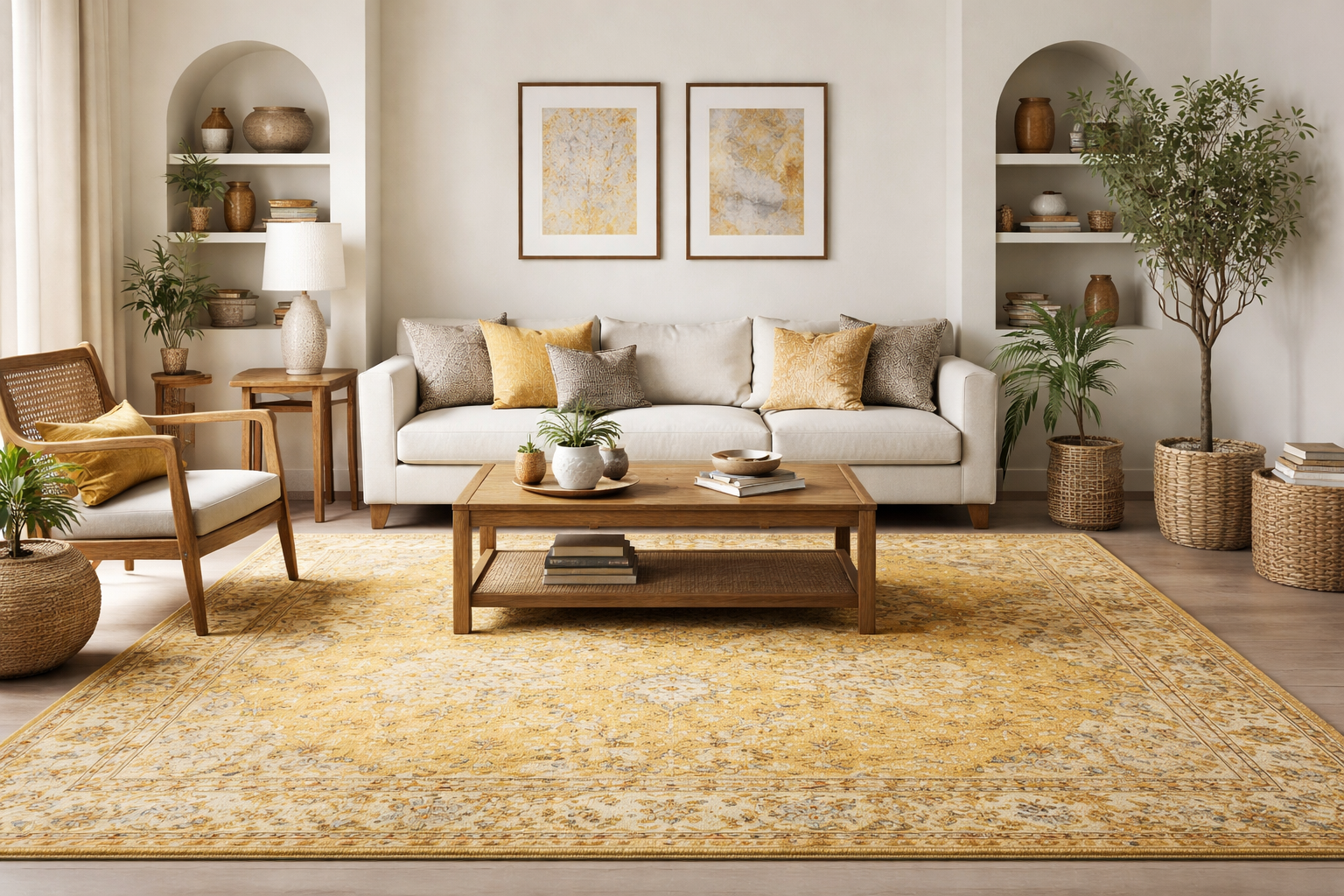
In living rooms, this size performs best when it is used with restraint. Instead of trying to fit all the furniture onto it, a more natural approach is to let it sit partially under the seating. Placing the front legs of the sofa on the rug creates a connection between the furniture and the floor without making the space feel tight.

This method also keeps the edges of the room open, which helps smaller spaces feel larger. The rug becomes a base that holds the seating area together rather than something that tries to contain everything.
When placed correctly, it subtly defines where the conversation area begins and ends. It does not demand attention, but it changes how the room feels.
How to Place a 5x8 Rug in a Bedroom
A 5x8 rug sits in that middle zone where it is neither too large to take over the bedroom nor too small to feel useless. Because of this, it needs to be placed with a bit more thought. It is not meant to go wall-to-wall. Instead, it should support the bed and add comfort where it actually matters.

The most natural way to place it is under the lower portion of the bed, letting it extend outward. This way, when you step down in the morning, your feet land on something soft instead of a cold floor. Visually, it also balances the room because the rug is partially visible and not hidden.
In smaller bedrooms, forcing the rug under the bed does not always work. In such cases, placing it along one side of the bed feels more practical. It may not follow a perfect layout, but it feels more usable in daily life, which matters more than symmetry.
Now when it comes to design, this size works best when the rug and the room support each other.
If you are using a minimal or neutral rug, the bedroom should carry some depth through other elements. Soft textures like layered bedding, slightly contrasting cushions, or a warm-toned throw can make the space feel complete. Light wood furniture, soft lighting, and subtle wall tones help the rug blend naturally without disappearing.
If the room itself is already minimal, then the rug can carry a bit of design. A gentle abstract pattern or tonal variation adds interest without making the space feel busy. The idea is not to match everything perfectly, but to create a balance where nothing feels out of place.
Because this size does not dominate the room, everything around it plays a role. When the rug, bed, and surrounding elements feel connected, the bedroom automatically feels more settled and comfortable.
How to Use a 5x8 Rug Under a Dining Table
Using a rug in a dining area can feel a bit tricky because this is one space where practicality matters as much as appearance. A 5x8 rug works well here, but only when the setup is simple, like a four-seater dining table.

The most important thing to think about is how the chairs move. Everything may look perfectly aligned when the chairs are tucked in, but real use tells a different story. When someone pulls the chair back, the legs should still remain on the rug. If they slip off the edge or catch against it, the entire setup starts to feel uncomfortable.
That is why placement needs to account for movement, not just symmetry. The rug should extend just enough around the table so that everyday use feels smooth and natural.

Material also plays a role in how practical the setup feels. Very thick or plush rugs may look good, but they make it harder to slide chairs in and out. A flatter or medium-textured surface tends to work better because it balances comfort with ease of use.
In a dining space, the rug should quietly support the setup without drawing attention to itself. When everything moves easily and nothing feels awkward, you know the placement is right.
Common Mistakes People Make with This Size
Even after choosing the right size, many setups still feel slightly off, and in most cases, it comes down to small placement decisions.
One of the most common mistakes is placing the rug in the center of the room without connecting it to any furniture. When it floats like that, it loses its purpose and starts to look disconnected. Another issue is trying to fit all furniture onto it, which makes the space feel compressed instead of balanced.
In dining areas, ignoring how chairs move is another frequent problem. It may look fine when everything is aligned, but the moment chairs are pulled out, the edges start interfering.
Most of the time, the issue is not the rug itself, but how it is used within the space.
How Room Size Affects the Way It Works
The same size can feel completely different depending on the room it is placed in.
In smaller rooms, it naturally fits and feels proportionate, helping define the area without overwhelming it. In medium-sized rooms, it works more as a visual anchor, bringing structure to a specific section rather than the entire space.
However, in larger rooms, it may start to feel slightly limited. The surrounding empty floor becomes more noticeable, and the setup may look incomplete if not styled carefully.
Understanding this difference helps set the right expectations before placing it in any room.
Simple Styling Ideas to Make the Space Feel More Balanced
Because this size does not dominate the room, the surrounding elements play an important role in how everything comes together.
Keeping some furniture slightly off the rug helps maintain openness and prevents the space from feeling crowded. Lighter tones tend to make the area feel more spacious, while repeating similar colors in cushions, curtains, or bedding creates a sense of connection.
Avoiding heavy borders or overly dark edges can also make a noticeable difference. Subtle designs and soft transitions help the rug blend naturally into the room rather than standing out too strongly.
Small adjustments like these often change how the entire space feels without requiring major changes.
Where This Size Works Most Naturally
This size tends to feel most comfortable in spaces where the goal is to define an area rather than cover it completely.
It works well in smaller living rooms where furniture needs a base without making the room feel tight. In bedrooms, it fits naturally when used partially under the bed or along one side. It also suits guest rooms, study areas, or quiet corners where a softer touch is needed without adding visual weight.
In all these spaces, it supports the layout rather than trying to control it.
Maintenance and Everyday Use
A rug becomes part of daily life, so it should be easy to manage.
Regular vacuuming helps maintain its look, while occasional rotation keeps wear even over time. In areas with more movement, choosing a surface that is easier to handle makes everyday use smoother.
The goal is to have something that feels comfortable to live with, not something that requires constant attention.
When This Size Feels Right and When It Doesn’t
The 5x8 rug works well when you want to define a part of the room without covering everything. It suits spaces where furniture already occupies most of the area and where a lighter, more flexible layout is needed.
However, in larger rooms or setups where all furniture needs to sit fully on the rug, this size may feel limited. In those cases, a larger rug creates better balance and proportion.
Understanding this difference helps avoid the common mistake of choosing the right rug but expecting it to do the wrong job.
This size works best when you understand its role in a space. It is not meant to cover an entire room, but to define a specific area within it. From selecting the right material and design to placing it correctly in different parts of the home, everything comes down to balance and proportion.
When used thoughtfully, it supports the room without overpowering it. And when the layout feels comfortable, practical, and visually connected, the space naturally comes together. This is also where brands like Decordec focus on creating rugs that balance design, proportion, and everyday usability, making it easier to find something that fits naturally into your space.
FAQS
1. Where should a 5x8 rug be placed in a living room?
It is best placed under the front legs of the sofa and chairs to connect the seating area while keeping the room open and balanced.
2. Is a 5x8 rug too small for a bedroom?
Not necessarily. It works well when placed under the lower part of the bed or along one side, especially in smaller bedrooms.
3. Can a 5x8 rug go under a dining table?
Yes, but it works best with a four-seater table. The rug should extend enough so chairs stay on it when pulled out.
4. How do you know if a 5x8 rug fits your room?
If your goal is to define a section rather than cover the entire floor, this size is suitable. In larger rooms, it may feel limited.
5. Should all furniture sit on the rug?
No, with this size it is better to place only the front legs of furniture on the rug to maintain balance and avoid a cramped look.
6. What type of rug works best for high-use areas?
Hand tufted or flatweave rugs are more practical for daily use, as they are easier to maintain and handle movement better.
7. How much space should be left around the rug?
There should be visible floor space around the edges so the rug does not feel forced or oversized for the layout.
8. Does rug color affect how big the room looks?
Yes, lighter tones can make the room feel more open, while darker or heavy patterns can make the space feel more compact.